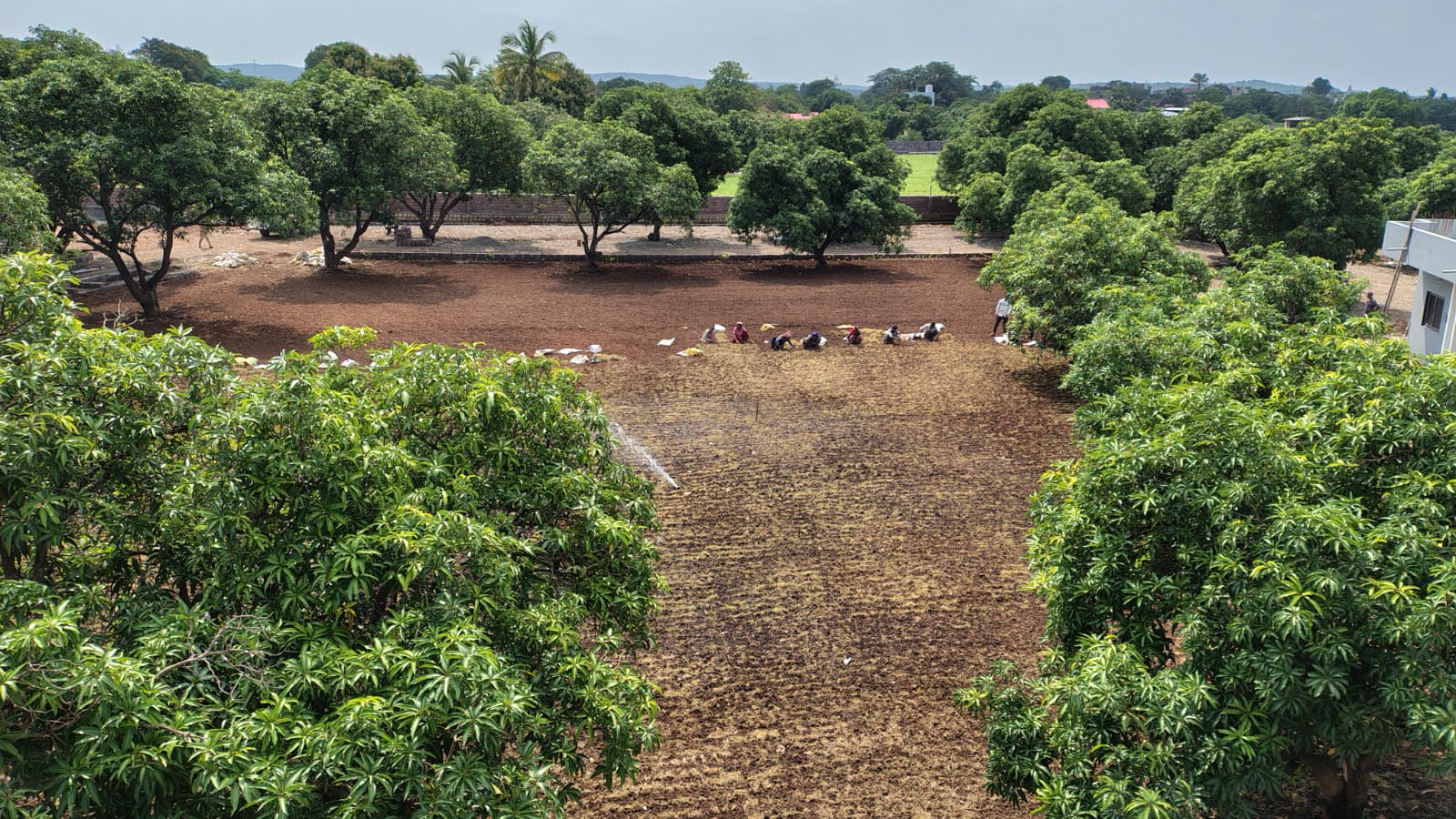
Fruit Orchard on a Gujarat Farmhouse: Trees, Timeline and Year 3
A fruit orchard on a Gujarat farmhouse: which trees to plant, spacing, irrigation and what to expect in year one versus year three.
A fruit orchard is one of the longer term investments a farmhouse owner in Gujarat can make in their land, and it is also one of the most misunderstood in terms of timeline. Clients often come to us expecting a productive orchard within the first year, when the honest picture is that most fruit trees need three years before they contribute meaningfully to the household, and some take longer. This guide covers what species work well in Gujarat’s climate, how to plan the layout, and what to realistically expect year by year.
Quick Answer
- Mango, chikoo, guava, and pomegranate are reliable choices for Gujarat farmhouses
- Year 1 is establishment, year 2 is light bearing, year 3 onward is meaningful yield
- Spacing and soil prep before planting matter more than variety selection
- Irrigation planning determines survival through the first two summers
Best Fruit Trees for Gujarat’s Climate
Mango remains the anchor choice for most Gujarat orchards, with Kesar and Alphonso varieties both performing well in the state’s heat and soil conditions, though Kesar tends to be more forgiving for first time orchard owners. Chikoo (sapota) is a strong secondary choice, tolerant of the region’s alkaline soil and requiring comparatively little specialized care once established. Guava bears relatively quickly compared to mango and gives farmhouse owners an earlier sense of return while the mango trees mature. Pomegranate suits drier pockets of Gujarat particularly well and has become a popular addition for its market value alongside home consumption.
Layout and Spacing Before Planting
Mango trees need roughly 8 to 10 meters of spacing in every direction at full maturity, which surprises many first time orchard owners who plant too densely based on how small a sapling looks at purchase. Chikoo and guava can be spaced more tightly, around 5 to 6 meters, while pomegranate does well even closer at 3 to 4 meters. We always plan the full mature canopy spread before a single tree goes in the ground, since correcting overcrowding later means removing trees that are already years into growth, which is a painful and avoidable loss.
| Tree | Spacing at maturity | Years to first meaningful yield |
|---|---|---|
| Mango | 8 to 10 meters | 4 to 5 years |
| Chikoo | 5 to 6 meters | 3 to 4 years |
| Guava | 5 to 6 meters | 2 to 3 years |
| Pomegranate | 3 to 4 meters | 2 to 3 years |
Soil Preparation Before Planting
Gujarat’s black cotton soil, common across much of the state’s farmland, needs real amendment before fruit trees go in, particularly for pits that will hold a tree for decades. Digging pits at least 1 meter cubed and backfilling with a mix of the original soil, compost, and coarse sand gives young roots a better start than planting directly into unamended clay. Drainage matters as much as fertility here, since waterlogged root zones during monsoon are one of the most common causes of young tree failure in Gujarat orchards, more so than pest pressure or heat stress.
What to Expect Year by Year
Year one is entirely about establishment: root systems developing, canopy filling in, and the tree adapting to its planting site. Expect no meaningful fruit and focus energy on consistent watering and protecting young trees from Gujarat’s peak summer heat with temporary shade netting if needed. Year two typically brings light, often disappointing, bearing on faster maturing species like guava and pomegranate, while mango and chikoo usually still show little to no fruit. Year three is where most orchards start to feel like they were worth the wait, with guava and pomegranate reaching solid production and mango beginning its own climb toward full yield over the following two years.
Irrigation Through the First Two Summers
The first two summers after planting are the highest risk period for tree loss in Gujarat’s climate, and irrigation planning during this window matters more than almost any other decision. Drip irrigation with a scheduled timer, rather than manual watering that can slip during busy periods, gives young trees the consistency they need through 40 plus degree heat. Mulching around the base of each tree also reduces water loss significantly and is a low cost addition that pays for itself within the first season through reduced watering frequency.
Ongoing Care and Maintenance
Once established, a Gujarat fruit orchard needs seasonal pruning to maintain airflow and manage canopy shape, along with an annual compost application timed before the monsoon to support the coming growth cycle. Pest monitoring, particularly for fruit flies in mango and guava, becomes more important as trees start bearing, since a productive tree with fruit loss to pests delivers far less value than the same tree properly protected. Many farmhouse owners choose an annual maintenance contract for exactly this reason, since orchard care requires knowledge of seasonal timing that is easy to miss without dedicated attention.
Planning an Orchard for Your Farmhouse?
We design and plant orchards suited to Gujarat’s climate and soil. Get in touch to discuss your land and goals.
Frequently Asked Questions
How long before a mango tree bears fruit in Gujarat?
Most mango trees take 4 to 5 years to reach meaningful yield, though some light bearing can appear as early as year 3 depending on variety.
Which fruit tree gives the fastest return for a new orchard?
Guava and pomegranate bear fastest, often giving light yield within 2 to 3 years while mango and chikoo are still establishing.
Is black cotton soil suitable for fruit trees?
Yes with proper pit preparation and drainage planning, black cotton soil works well for fruit trees, though unamended clay causes root problems.
How much space does a mature mango tree need?
Plan for 8 to 10 meters of spacing in every direction, since mango canopies spread significantly wider than young saplings suggest.
Do young fruit trees need shade netting in Gujarat summers?
Temporary shade netting during the first one to two summers helps young trees survive peak heat before their root systems fully establish.
Is an annual maintenance contract worth it for a small orchard?
For most farmhouse owners yes, since orchard care requires seasonal timing knowledge for pruning, fertilizing, and pest control that is easy to miss.

Digital Marketing Head at GreenLand Landscape, leading SEO and outreach across Gujarat.
Leave a Reply