Palm Tree Transplanting in Gujarat: Cost and How the Process Works
Palm tree transplanting in Gujarat costs ₹15,000–₹65,000 per tree depending on height and access. How the crane lift works and what survival rate to expect.
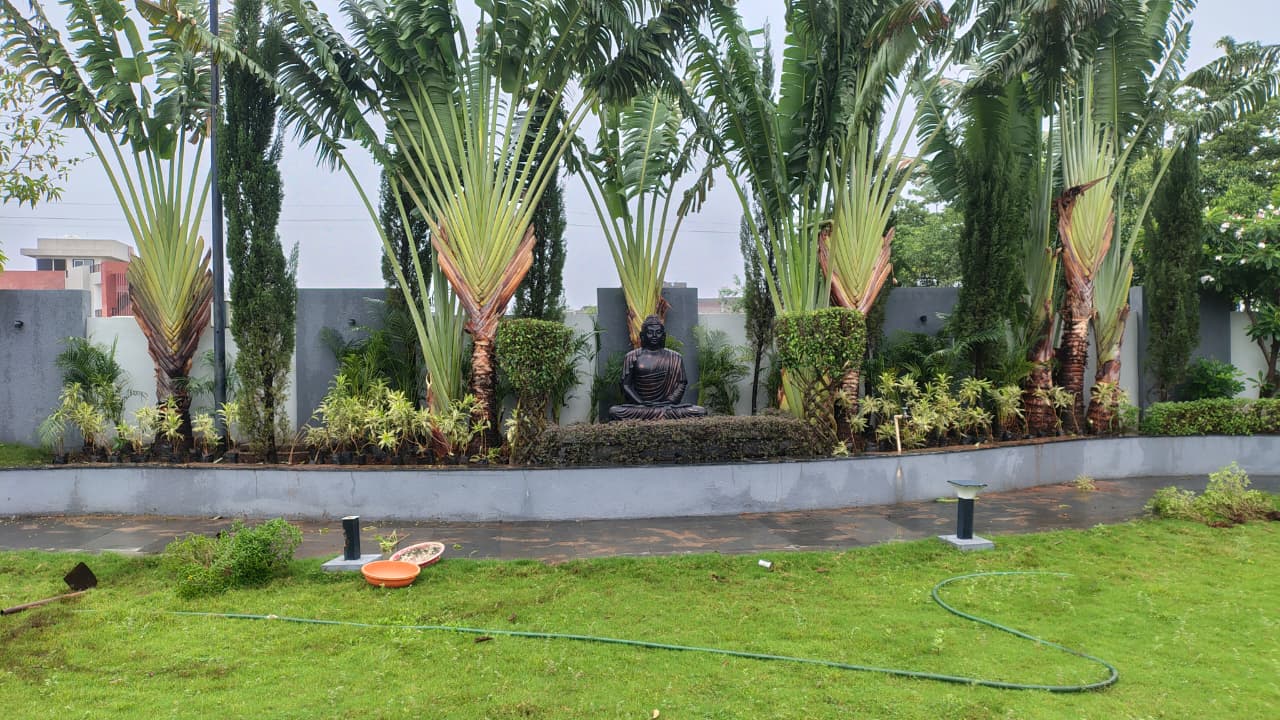
Palm tree transplanting in Gujarat costs ₹15,000 to ₹65,000 per tree, depending on height, whether a crane is needed, and how far the tree is moving. We handle this most often for bungalow redesigns, plot boundary changes, and palms that have outgrown a driveway or swimming pool edge, across Ahmedabad, Gandhinagar and the rest of Gujarat.
2026 palm transplanting cost snapshot
- Small palm, under 12 ft, manual lift: ₹15,000 to ₹25,000
- Medium palm, 12 to 20 ft, crane assisted: ₹25,000 to ₹45,000
- Large palm, over 20 ft, crane plus wide access: ₹45,000 to ₹65,000+
- Best transplant window: October to February
- Includes root ball prep, staking, and a 6 week aftercare watering schedule
What determines the cost of palm transplanting
Five things move the price, and they matter more than the species itself in almost every case we quote.
- Height and girth: A palm under 12 ft with a narrow trunk can often be moved by a 4 to 5 person team with a tripod winch. Anything over 15 to 18 ft needs a crane, which is the single biggest jump in cost.
- Site access: Old city plots in Ahmedabad with narrow gates or overhead wires often rule out crane access entirely, forcing a slower manual method that costs more in labour even though no machine hire is involved.
- Root ball size: We dig a root ball proportional to trunk diameter, roughly 25 to 30 percent of the visible height as a radius for most Gujarat grown palms. A bigger root ball survives better but costs more to excavate, wrap and lift.
- Distance moved: Relocating a palm within the same plot is cheaper than moving it across the city, which needs a flatbed and road permissions for anything over 20 ft tall.
- Species: Washingtonia and Areca palms have fibrous, forgiving root systems. Date palms and Bismarckia are heavier and slower to re establish, which adds to root ball size and aftercare cost.
How the transplanting process works
- Site survey and root pruning: Two to three weeks before the move, we root prune around the intended root ball line. This forces the palm to grow new feeder roots inside the ball before it is lifted, which is the single biggest factor in survival.
- Root ball excavation and wrapping: The root ball is dug out, kept moist, and wrapped in burlap or a wire basket so it does not crack apart during the lift.
- Lifting: A tripod winch handles smaller palms, a mobile crane handles anything tall or heavy, lifting by the trunk with padded straps, never by the fronds.
- Transport and replanting: The palm goes straight into a pre dug pit at the new location, set at the same soil depth it was growing at before. Planting too deep is one of the most common causes of failure.
- Staking and aftercare: Guy wires or wooden braces hold the palm steady for 8 to 12 weeks while new roots anchor it. We put every relocated palm on a watering schedule for the first six weeks.
Price breakdown by palm size
| Palm height | Method | Cost | Timeline |
|---|---|---|---|
| Under 12 ft | Manual or tripod winch | ₹15,000 to ₹25,000 | 1 day |
| 12 to 20 ft | Crane assisted | ₹25,000 to ₹45,000 | 1 to 2 days |
| Over 20 ft | Crane plus flatbed transport | ₹45,000 to ₹65,000+ | 2 to 3 days |
| Multiple palms (avenue or boundary) | Crane, per tree rate drops | 10 to 15% discount per tree | Varies |
Best time to transplant palms in Gujarat
Timing affects survival as much as technique does. We avoid two windows. Peak summer, April to June, when 43 to 45 degree heat stresses a palm before its root system has re established, and the heaviest monsoon weeks in July and August, when a freshly dug pit in Gujarat’s black cotton soil can waterlog and rot new roots before they form. The reliable window is October through February, when soil moisture is manageable and temperatures give the root ball time to settle before the next summer arrives.
Survival rate and aftercare
A palm transplanted with proper root pruning and staking has a survival rate above 90 percent in our experience. The first six weeks are the highest risk period, since the palm has no functioning root hairs yet and is drawing on stored trunk moisture instead. We water every two to three days in that window, check staking tension weekly, and avoid any fertiliser application until at least eight weeks in, since it can burn roots that have not fully re established.
Palm transplanting across Ahmedabad, Gandhinagar and Gujarat
Cost stays roughly the same across Vadodara, Anand, Rajkot and Surat, but access varies a lot from site to site. Farmhouses and larger plots in Anand and Vadodara usually allow direct crane access, which keeps costs at the lower end of each bracket. Older residential pockets in Ahmedabad and Surat more often need manual or semi manual moves because of narrow lanes and overhead electric lines, something we assess on the site visit before quoting a final price.
Get a fixed quote for your palm transplant
Free site visit across all six cities. We check access, root ball size and crane feasibility before quoting a fixed price.
Common questions

Digital Marketing Head at GreenLand Landscape, leading SEO and outreach across Gujarat.
Leave a Reply