Balcony vs Terrace vs Ground: Where to Put Your Kitchen Garden
Balcony, terrace or ground-level kitchen garden in Gujarat: sunlight, drainage, cost and what grows best in each. With a comparison table.
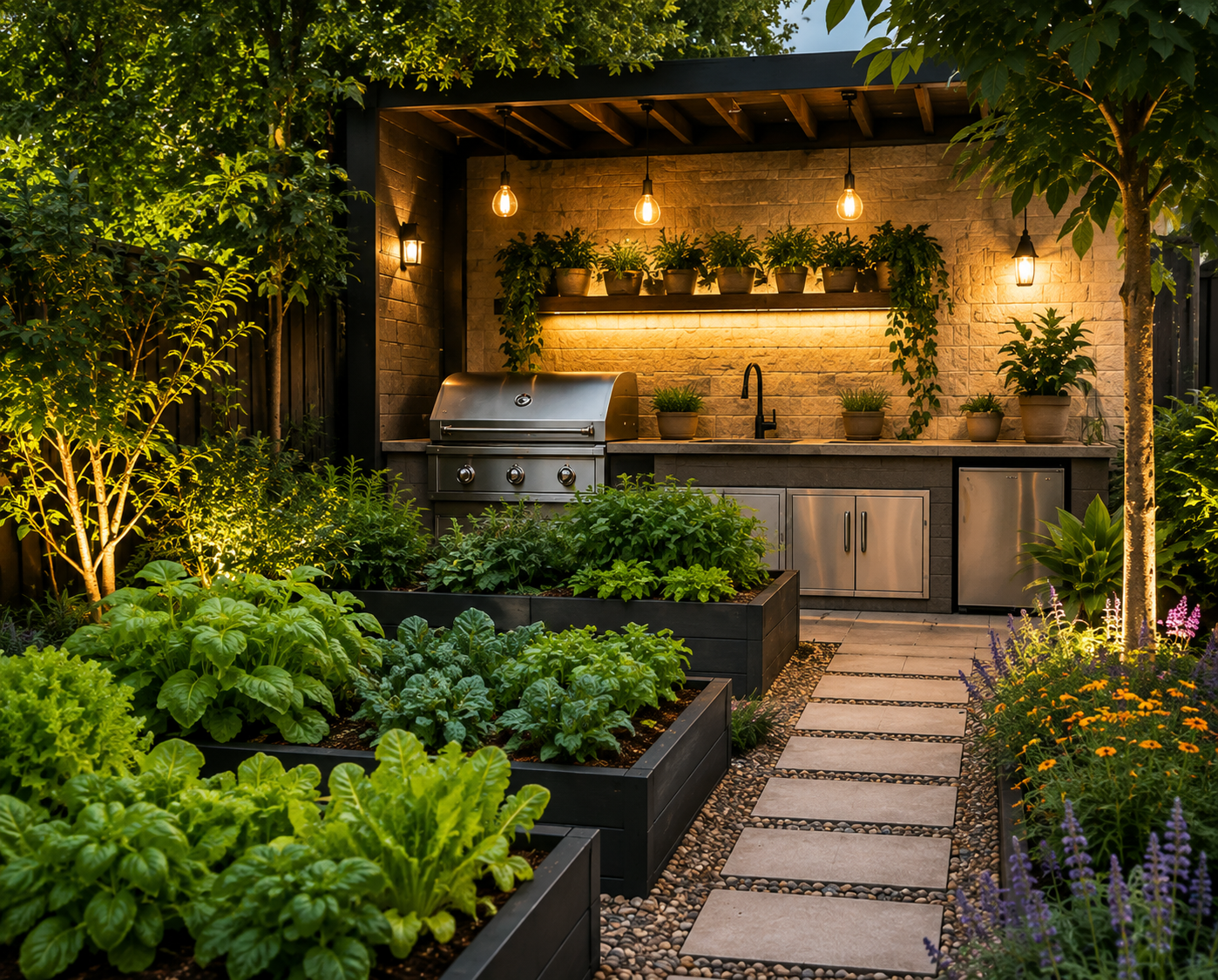
One of the first questions we ask every new client in Ahmedabad is simple: where in your home makes sense for a kitchen garden? The answer is not always obvious, and the wrong choice leads to a garden that either underperforms or becomes a constant maintenance headache. Balconies, terraces, and ground level plots each come with distinct advantages and real constraints, and matching the space to realistic expectations is one of the most important decisions in the entire planning process.
Quick Answer
- Balconies suit herbs and compact crops but face sunlight and weight limits
- Terraces offer the most flexibility and sun exposure for a full kitchen garden
- Ground plots give the most soil depth but often the least direct sunlight
- Most Ahmedabad homes do best combining two of these spaces
Balcony Gardens: Compact but Constrained
Balconies work well for herbs, small leafy greens, and a handful of compact containers, making them a reasonable starting point for someone new to gardening who wants low commitment. The main constraints are sunlight, since many Ahmedabad balconies face a direction that gets only a few hours of direct light, and structural weight limits, which matter more than people expect once you factor in wet soil, containers, and water. We always ask about balcony orientation and railing load capacity before recommending anything beyond lightweight pots and a few grow bags.
Terrace Gardens: The Most Flexible Option
A rooftop terrace typically offers the best combination of space and sun exposure available in an Ahmedabad home, which is why most of our full scale kitchen garden installations happen on terraces. Full sun through most of the day supports fruiting vegetables like tomato and brinjal that struggle in partial shade, and the open layout allows for raised beds, grow bag rows, and vertical elements all in the same space. The tradeoff is heat: terraces catch the most direct summer sun, so irrigation planning and some shade structuring become more important here than in any other location.
| Space | Sun exposure | Best suited crops |
|---|---|---|
| Balcony | Often partial, varies by direction | Herbs, small greens |
| Terrace | Usually full sun | Tomato, brinjal, full vegetable range |
| Ground plot | Depends on surrounding structures | Varies, often shade tolerant crops |
Ground Level Gardens: Depth Without Always Enough Light
Ground level plots give access to real soil depth, which sounds like a clear advantage until you consider that many Ahmedabad bungalow plots have limited open ground due to boundary walls, neighboring construction, or existing trees casting shade for part of the day. When a ground plot does get good sun, it is genuinely excellent for a kitchen garden since there is no weight limit and soil amendment is more straightforward than in containers. The key is doing an honest sun mapping exercise across the day before committing a ground plot to vegetables that need full sun to perform.
Why Sun Mapping Matters More Than Space Size
We ask every client to track sunlight across their proposed space for at least one full day, ideally during both summer and winter since the sun angle shifts meaningfully between seasons in Gujarat. A larger space with four hours of usable sun will consistently underperform a smaller space with seven hours, which is a lesson many clients only fully accept once they have already invested in a poorly lit garden that struggles despite generous size. Sun mapping before installation avoids this entirely and should always come before any layout decisions.
Combining Spaces for the Best Results
Many of our most successful Ahmedabad kitchen gardens use two spaces together rather than relying on just one. A terrace handling the full sun vegetables like tomato, chili, and brinjal, paired with a balcony herb section for daily kitchen use, covers both the productivity and convenience angles well. Ground plots, when available and well lit, work best as a supplementary space for larger or longer season crops like brinjal or a small fruit tree, rather than the entire garden’s foundation.
Weight and Structural Considerations
This is the most commonly overlooked factor in balcony and terrace gardens alike. Wet soil in a filled raised bed or a row of large grow bags carries real weight, and older Ahmedabad buildings were not always designed with garden loads in mind. Before any significant terrace installation, we recommend checking with a structural engineer or at minimum consulting the building’s original load specifications, particularly for terraces on older construction or buildings above two or three floors where load distribution matters more.
Revisiting Your Space Choice Over Time
Your ideal growing space is not necessarily fixed forever, and revisiting the choice as your gardening interest grows or your household’s needs change is entirely reasonable. Many clients start with a small balcony herb setup and later expand to a terrace installation once they have confirmed their interest and commitment. Designing your initial setup with future expansion in mind, rather than treating it as a permanent final decision, keeps your options open as your gardening journey develops.
Not Sure Which Space Is Right for You?
We can assess your balcony, terrace, or ground plot and recommend the best setup for your goals. Contact our team for a site visit.
Frequently Asked Questions
Which space gets the most sunlight in a typical Ahmedabad home?
Terraces usually offer the most consistent full sun exposure, while balconies and ground plots depend heavily on direction and surrounding structures.
Can a balcony support a full vegetable garden?
A balcony works best for herbs and compact crops, since sunlight and weight limits typically restrict how much a balcony garden can support.
Do I need a structural engineer before a terrace garden?
For larger installations, especially on older buildings, checking load capacity is worth doing before committing to raised beds or heavy containers.
How do I know if my ground plot gets enough sun?
Track sunlight across a full day, ideally in both summer and winter, since shifting sun angles across seasons affect how much light a space actually gets.
Is it better to combine a terrace and balcony garden?
Yes, many of our most successful gardens use a terrace for sun loving vegetables and a balcony for herbs kept close to the kitchen.
What vegetables tolerate partial shade best?
Leafy greens and many herbs tolerate partial shade reasonably well, while fruiting vegetables like tomato and brinjal need consistent full sun to thrive.

Founder & CEO of GreenLand Landscape, leading landscape design and organic kitchen garden projects across Gujarat.
Leave a Reply