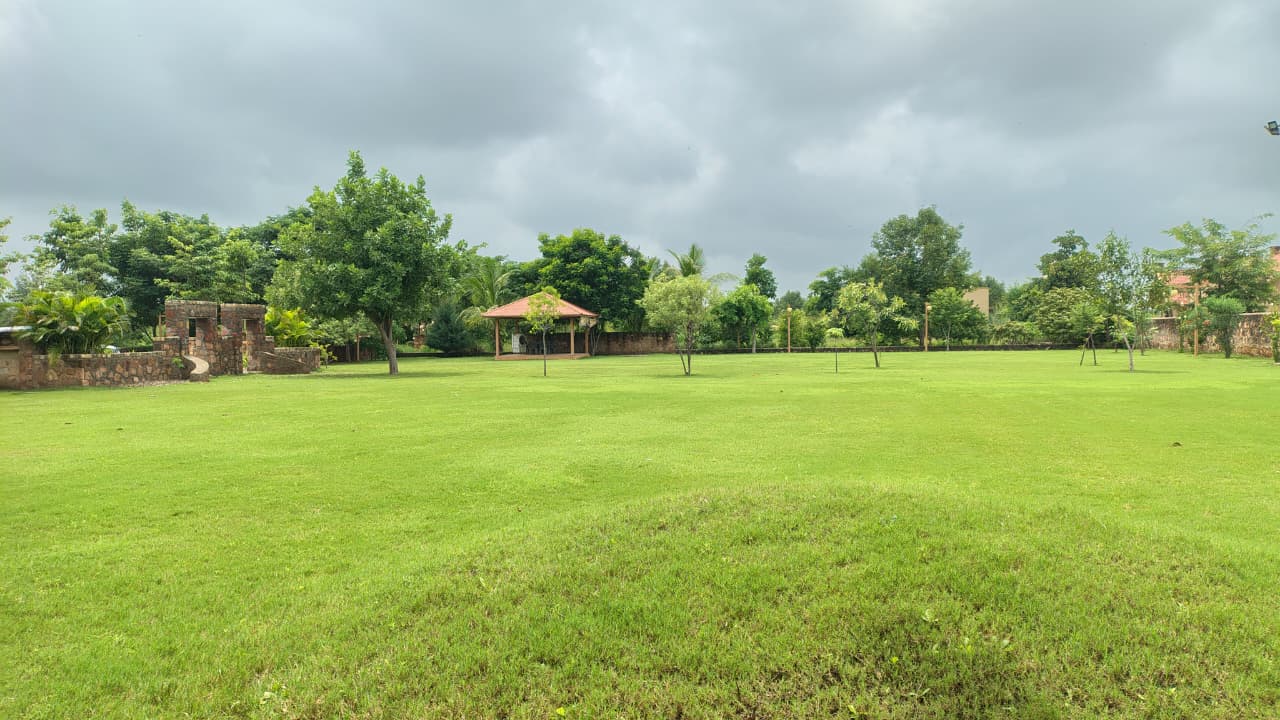
Farmhouse Landscaping in Gujarat: What Is Different From a City Bungalow
Farmhouse landscaping in Gujarat: larger plots, fewer water points, dust from fields, more wildlife pressure. What we design differently from a city bungalow.
Farmhouse landscaping and city bungalow landscaping might look similar in a portfolio photo, but the underlying design thinking differs substantially once you account for scale, water access, and how the property actually gets used. Clients moving from planning a bungalow garden to a farmhouse project are often surprised by how many assumptions need to be rethought. This guide covers the key differences we navigate when designing farmhouse landscapes across Gujarat compared to our typical city bungalow work.
Key Takeaways
- Scale changes the entire design approach, from irrigation to plant sourcing
- Water access and borewell dependency shape what is realistic to plant
- Farmhouses often combine ornamental, orchard, and kitchen garden zones
- Security and boundary considerations differ significantly from city plots
Scale Changes Everything About the Design Approach
A typical city bungalow garden in Ahmedabad might cover a few hundred square feet, while farmhouse properties in Gujarat often span an acre or more, which fundamentally changes how we approach layout, plant spacing, and even the tools and labor needed for installation. Design elements that work fine at bungalow scale, like hand watering a small planted bed, simply are not practical across a farmhouse’s much larger footprint, pushing us toward automated irrigation and hardier, lower maintenance plant choices across the bulk of the property from the very start of planning.
Water Access and Borewell Dependency
City bungalows typically draw on municipal water supply, giving reasonably predictable access for irrigation planning. Many Gujarat farmhouses instead depend on borewells, and groundwater availability and quality vary significantly by location, sometimes changing even within the same district. Before finalizing any farmhouse landscaping plan, we recommend testing the borewell water for salinity and mineral content, since Gujarat’s groundwater in some areas is hard or saline enough to limit which plants will thrive, information that directly shapes species selection for the entire project.
| Factor | City bungalow | Farmhouse |
|---|---|---|
| Water source | Municipal supply | Often borewell dependent |
| Typical plot size | Few hundred sq ft | One acre or more |
| Irrigation approach | Manual or simple drip | Automated, zoned systems |
Combining Ornamental, Orchard and Kitchen Garden Zones
Farmhouse landscaping in Gujarat frequently combines multiple purposes within one property in a way city bungalows rarely do given their smaller footprint. An ornamental zone near the main house for aesthetics and outdoor gatherings, a fruit orchard section that develops over several years, and a working kitchen garden for household vegetable supply often coexist on the same farmhouse property, each with different soil, water, and sun requirements. Planning these zones together from the start, rather than adding them piecemeal over time, produces a more coherent property and avoids irrigation and access conflicts later.
Security and Boundary Considerations
Farmhouses, often unoccupied for stretches of time compared to a primary city residence, need landscaping that accounts for security and low supervision periods in a way bungalow gardens typically do not. Boundary plantings that also serve as a natural barrier, motion activated or scheduled irrigation that does not depend on someone being present daily, and hardier plant selections that can tolerate occasional missed watering all factor into farmhouse design decisions that would be unusual considerations for a daily occupied city garden.
Maintenance Realities for a Property You Do Not Visit Daily
Because many farmhouse owners visit on weekends or less frequently rather than living there full time, maintenance planning has to account for lower supervision than a city bungalow garden receives from an owner present every day. We generally recommend a dedicated caretaker or maintenance staff arrangement for any farmhouse landscaping beyond a small scale, since even well designed automated irrigation cannot substitute entirely for someone checking on plant health, pest issues, and general upkeep on a regular schedule.
Planning Timeline and Phased Development
Given the scale involved, farmhouse landscaping projects often make more sense phased over multiple seasons rather than attempted all at once, particularly when an orchard component is involved since fruit trees need years to mature regardless of how quickly the rest of the property gets planted. We often start with core infrastructure, irrigation lines, boundary plantings, and the immediate area around the main structure, then expand into orchard and additional ornamental zones over subsequent seasons as the property’s water systems and initial plantings prove themselves reliable.
Planning Utility Infrastructure Early
Farmhouse properties often need electrical and water infrastructure extended to support irrigation pumps, lighting, and any water features, which is far easier to plan during initial construction than retrofit later. Coordinating landscaping plans with any ongoing building construction, rather than treating them as entirely separate phases, avoids situations where finished hardscaping needs to be dug up again for utility access. We recommend involving a landscape designer during the property’s broader construction planning whenever that timing is possible.
Reach out to discuss your farmhouse property, and we can advise on phasing, water strategy, and the right balance of ornamental and productive zones for your goals.
Planning a Farmhouse Landscaping Project?
We design for the realities of larger properties, from water access to phased development. Talk to us about your land.
Frequently Asked Questions
Is farmhouse landscaping just a bigger version of bungalow landscaping?
Not really, scale changes irrigation approach, water source dependency, and plant selection in ways that go beyond simply doing more of the same.
Should I test my farmhouse’s borewell water before planting?
Yes, testing for salinity and mineral content helps determine which plants will actually thrive, since Gujarat groundwater quality varies significantly by location.
Can a farmhouse combine an orchard with ornamental landscaping?
Yes, many Gujarat farmhouses successfully combine ornamental, orchard, and kitchen garden zones when these are planned together from the start.
Does a farmhouse garden need a caretaker?
For most farmhouses visited less than daily, a dedicated caretaker or maintenance arrangement helps catch issues that automated irrigation alone cannot address.
Should farmhouse landscaping be done all at once?
Phasing over multiple seasons often works better, especially with orchard components, since fruit trees need years to mature regardless of overall pace.
What plants work best for low supervision farmhouse properties?
Hardier, drought tolerant species that survive occasional missed watering are generally better suited to farmhouses with lower day to day supervision.
Leave a Reply