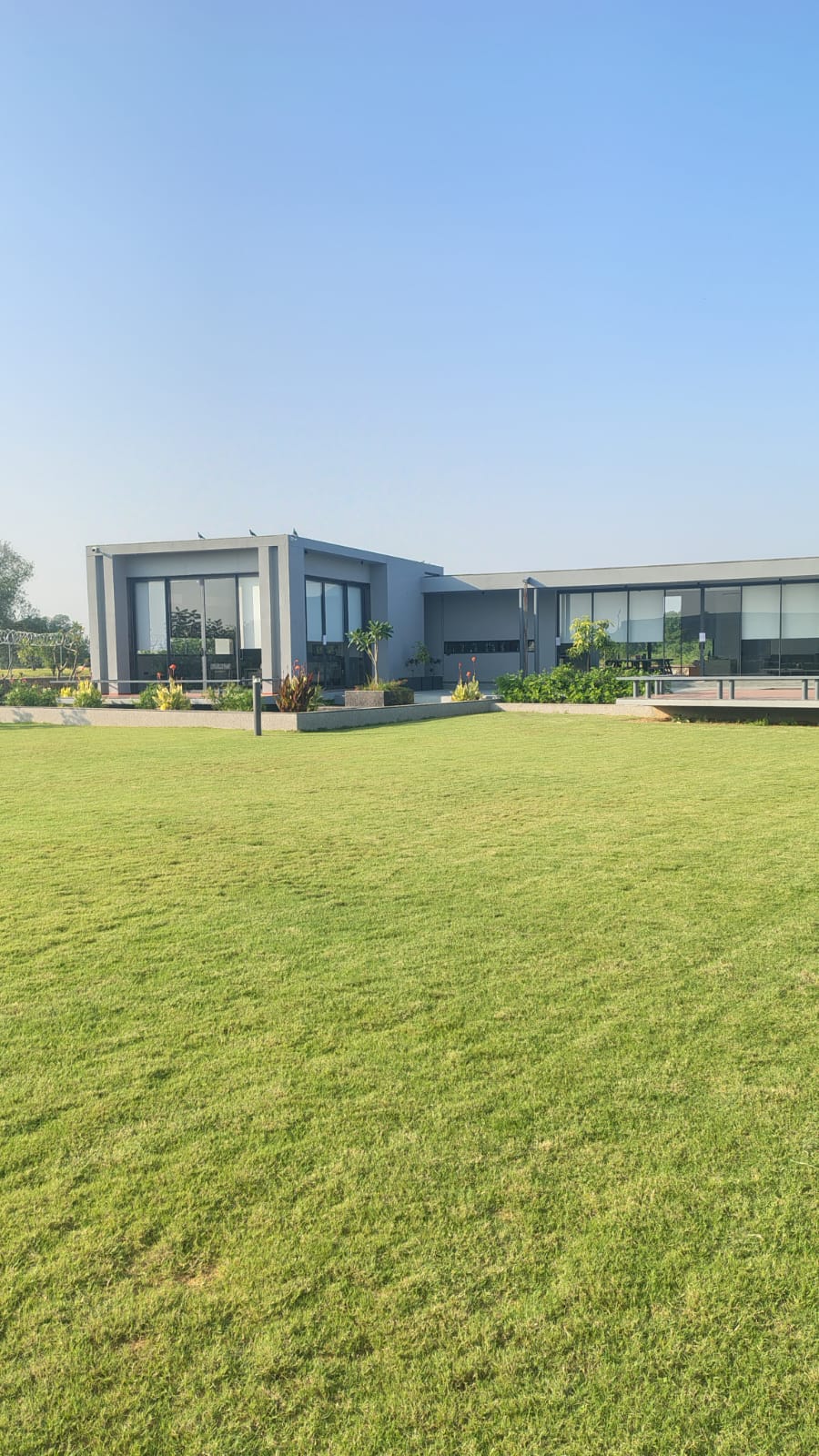
Corporate Campus Landscaping in Gandhinagar and Ahmedabad
Corporate campus landscaping in Gandhinagar and Ahmedabad: what facilities managers ask, what it costs and how maintenance contracts work.
Corporate campus landscaping sits at the intersection of design, function, and long term cost management, and it is a very different discipline from residential garden work. Across Gandhinagar’s GIFT City corridor and Ahmedabad’s growing office districts along SG Highway and the outskirts near Sanand, companies are increasingly treating outdoor space as part of their employee experience and brand presentation rather than an afterthought. This guide covers what makes corporate landscaping different and what actually matters when planning a campus project in this region.
Key Takeaways
- Low maintenance plant selection matters more than in residential projects
- Employee wellness spaces have measurable impact on satisfaction
- Water efficient irrigation is essential given commercial water costs
- Phased maintenance contracts work better than one time installation for campuses
How Corporate Landscaping Differs From Residential Work
A residential garden serves one household’s preferences and can tolerate some seasonal variability in appearance. A corporate campus, by contrast, needs to look presentable year round for client visits, employee use, and brand consistency, which changes almost every design decision from plant selection to maintenance scheduling. Budgets are typically larger, but so is scrutiny, since facilities teams need to justify landscaping spend against measurable outcomes like employee satisfaction, reduced water usage, or property value, rather than personal enjoyment alone.
Plant Selection for Low Maintenance, High Impact
We lean heavily toward drought tolerant and low maintenance species for corporate campuses in Gujarat’s climate, since a large planted area with high maintenance needs quickly becomes a recurring cost problem for facilities budgets. Native and adapted species like bougainvillea, hibiscus, and various ornamental grasses provide strong visual impact with comparatively low water and care requirements. Shade trees along walkways and parking areas serve a dual purpose, improving the visual environment while genuinely reducing ambient temperature in outdoor seating and transit areas during Gujarat’s long hot season.
Employee Wellness and Outdoor Break Spaces
Companies across Gandhinagar and Ahmedabad have increasingly asked us to design outdoor break areas and small green pockets specifically for employee use, not just decorative landscaping visible from the building exterior. Shaded seating clusters, walking paths through planted areas, and even small kitchen garden plots for employee wellness programs have become common requests over the past few years. These spaces get real usage when designed thoughtfully, and several clients have reported them becoming a genuine factor in employee satisfaction surveys and even recruitment conversations.
Water Efficient Irrigation at Campus Scale
Water costs at commercial scale add up quickly, and inefficient irrigation on a large campus can represent a significant ongoing expense that is entirely avoidable with the right system design. Drip irrigation zoned by plant water needs, combined with smart controllers that adjust for rainfall and season, typically cuts water usage substantially compared to older sprinkler based systems still common on older campuses. For new construction projects, we now recommend water efficient irrigation as a default specification rather than an upgrade option, given how quickly the cost savings offset the initial investment.
| Irrigation type | Relative water use | Best for |
|---|---|---|
| Sprinkler systems | Higher | Large open lawn areas |
| Drip irrigation | Lower | Beds, shrubs, planted borders |
| Smart zoned systems | Lowest | Mixed campus landscapes |
Why Maintenance Contracts Work Better Than One Time Projects
A corporate campus landscape installed well but left without ongoing care degrades faster than most facilities teams expect, particularly in Gujarat’s climate where summer heat stresses plants significantly without consistent attention. We generally recommend structuring campus landscaping as an installation phase followed by an annual maintenance contract, rather than treating the project as complete once planting finishes. This keeps the space performing at the standard it was designed for and gives facilities teams predictable budgeting rather than reactive repair costs when neglected areas eventually need major rework.
Planning Timeline for a Campus Project
Larger corporate campus projects typically run 3 to 6 months from initial design through completed installation, depending on the scope of hardscaping, irrigation infrastructure, and planting involved. We recommend starting the design process well ahead of any target completion date tied to a building opening or major event, since plant establishment and irrigation testing both need time that cannot be meaningfully compressed without risking a weaker final result. Phasing large campuses into sections also allows portions of the space to open for use before the entire project completes.
Measuring Return on Landscaping Investment
Facilities teams increasingly want to quantify landscaping’s impact, and a few metrics have proven useful across our corporate projects: employee satisfaction survey scores mentioning outdoor space, reduction in water usage after irrigation upgrades, and even client feedback following visits to well maintained campuses. Tracking these before and after a landscaping project gives facilities managers concrete data to justify the investment, rather than relying purely on subjective impressions when reporting to leadership on the value delivered.
Reach out to discuss how landscaping can support your campus goals, whether that means employee wellness, sustainability targets, or simply a more welcoming environment for visitors.
Planning a Corporate Landscaping Project?
We work with facilities and HR teams across Gandhinagar and Ahmedabad on campus landscaping. Reach out to discuss your project.
Frequently Asked Questions
How is corporate landscaping different from a home garden?
Corporate landscaping needs year round presentability for client visits and brand consistency, with maintenance efficiency and measurable outcomes mattering more than personal preference.
What plants work best for low maintenance corporate campuses?
Drought tolerant species like bougainvillea, hibiscus, and ornamental grasses provide strong visual impact with comparatively low water and care needs.
Do employee wellness gardens actually get used?
Yes, when designed thoughtfully with shade and comfortable seating, these spaces see real regular use and often show up positively in employee satisfaction surveys.
How much can smart irrigation save on a corporate campus?
Zoned drip systems with smart controllers typically cut water usage substantially compared to older sprinkler systems, offsetting the setup cost over time.
Is an annual maintenance contract necessary for campus landscaping?
We strongly recommend it, since Gujarat’s summer heat stresses plants quickly without consistent care, and neglected areas eventually need costly major rework.
How long does a corporate campus landscaping project take?
Most projects run 3 to 6 months from design through completed installation, depending on hardscaping scope and irrigation infrastructure involved.

Digital Marketing Head at GreenLand Landscape, leading SEO and outreach across Gujarat.
Leave a Reply