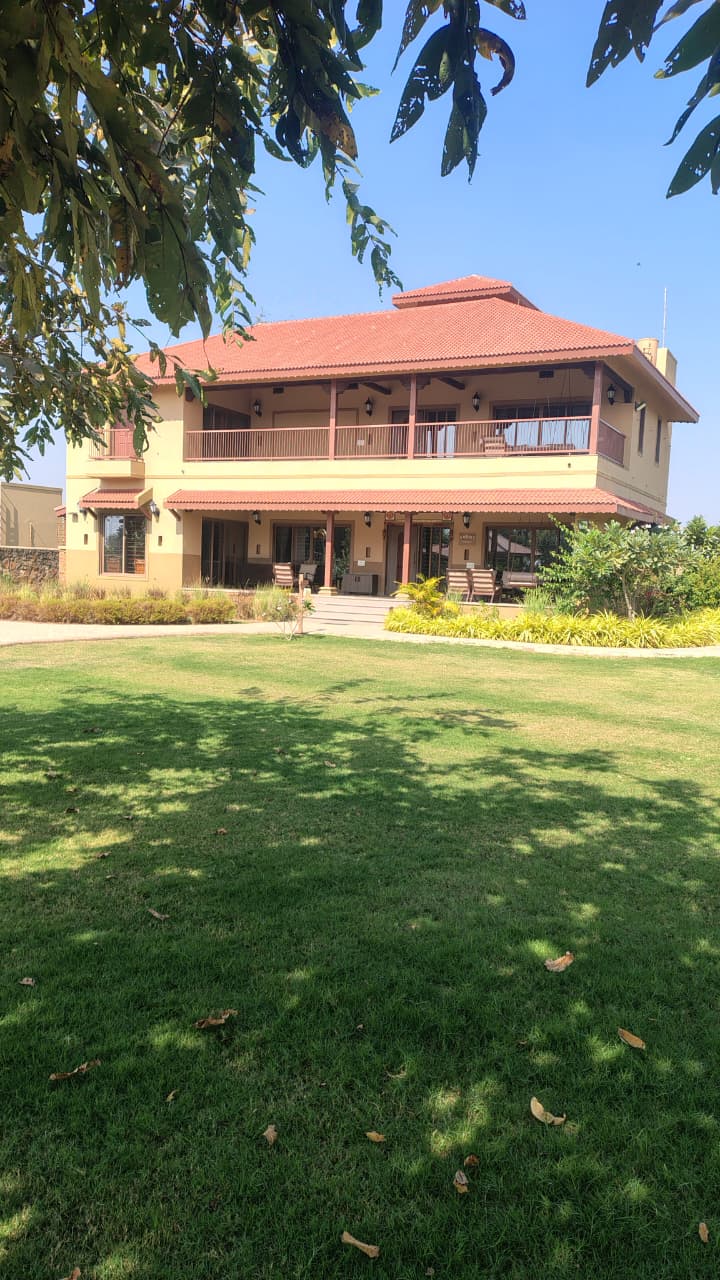
Best Trees for a Gujarat Bungalow That Survive 45°C Summer
The best trees for a Gujarat bungalow: species that survive 45°C, do not crack foundations and need minimal summer irrigation. With local names.
A Gujarat bungalow needs trees that can handle 43 to 45 degree dry heat, months without meaningful rain, and often black cotton soil underfoot. Not every ornamental species sold at a local nursery is built for that combination. Neem, gulmohar, karanj and native ficus varieties consistently outperform imported or moisture loving species in our installations across Ahmedabad and Gandhinagar, year after year.
Quick picks
- Best all round shade tree: Neem, drought tolerant, fast growing, low maintenance
- Best flowering statement tree: Gulmohar, thrives in full summer sun
- Best for narrow plots: Ashoka, vertical growth habit
- Avoid near foundations in black cotton soil: species with aggressive surface roots
- Water needed in first year: regular deep watering, largely self sufficient after establishment
Trees that survive Gujarat’s summer heat
| Tree | Height | Best for | Water needs once established |
|---|---|---|---|
| Neem | 15 to 20 m | Shade, low maintenance | Low, highly drought tolerant |
| Gulmohar | 9 to 12 m | Flowering statement tree | Low to moderate |
| Karanj (Pongamia) | 8 to 15 m | Shade, tolerates poor soil | Low |
| Ashoka (false ashoka) | 10 to 15 m | Boundary screening, narrow plots | Moderate |
| Ficus varieties | Varies, often large | Large shade canopy | Low once established, needs space for roots |
Why these species work here
All of these are either native or long naturalised to Gujarat’s semi arid climate, which means they have evolved deep or extensive root systems that reach groundwater well below the surface, along with leaf structures that reduce water loss during dry heat. Neem in particular tolerates poor, compacted soil and needs minimal irrigation once past its first year or two of establishment. This is exactly why it is the default recommendation for most bungalow shade needs across our projects, regardless of plot size or budget.
Foundation and black cotton soil considerations
In black cotton soil especially, avoid planting large trees with aggressive surface roots within 3 to 4 m of the house foundation. Seasonal soil movement combined with root pressure can affect shallow foundations over several years, even if nothing looks wrong in the short term. Ficus varieties, while excellent shade trees, need the most setback distance because of their extensive root systems. Karanj and gulmohar are considerably safer choices closer to structures if space near the house is limited.
Best time to plant
October through February is ideal. Cooler temperatures let a newly planted tree establish roots before facing its first peak summer, which is by far the most stressful period for a young tree. Trees planted right before or during peak summer, April through June, need significantly more attentive watering to survive the establishment period, and even then the success rate is noticeably lower than trees planted in the cooler months.
Common tree selection mistakes
The most common mistake we see is choosing a fast growing species purely for quick shade without checking its mature root spread relative to the foundation, boundary walls or underground utility lines. A tree that looks perfect at five years old can become a maintenance problem at fifteen if its roots were never given enough space to begin with. The second common mistake is planting moisture loving ornamental species popular in cooler climates, which need far more irrigation here than most households are prepared to commit to over the tree’s lifetime.
Tree selection across Gujarat
These recommendations apply broadly across Gandhinagar, Vadodara, Anand, Rajkot and Surat, since the underlying summer heat challenge is shared across the region. Coastal humidity in Surat allows slightly more flexibility with moisture loving flowering species alongside the drought tolerant core picks listed above.
Get tree recommendations for your plot
Free site visit. We assess your soil, space and foundation proximity before recommending species.
Planting With Future Growth in Mind
A common mistake is planting trees too close to boundary walls, driveways, or the house itself, based on how small the sapling appears at purchase rather than its mature canopy spread. We always plan tree placement around full grown size, even though this can feel like wasted space in the early years. This foresight prevents costly problems later, root damage to structures, blocked walkways, or trees that eventually need removal simply because they were placed without considering their eventual size.
Native Species Versus Ornamental Imports
Native and regionally adapted trees generally require less water and maintenance than ornamental imports once established, an important consideration given Gujarat’s water constraints. Species like neem, gulmohar, and various native flowering trees have adapted over generations to the local climate and soil, giving them a resilience advantage that imported ornamentals often lack. We recommend a majority native planting palette with select ornamental accents, balancing visual variety with the practical benefits of species suited to local conditions.
If you are unsure which species suit your specific plot, we can walk your property and recommend a planting plan matched to your soil, sun exposure, and long term space constraints.
Common questions

Digital Marketing Head at GreenLand Landscape, leading SEO and outreach across Gujarat.
Leave a Reply