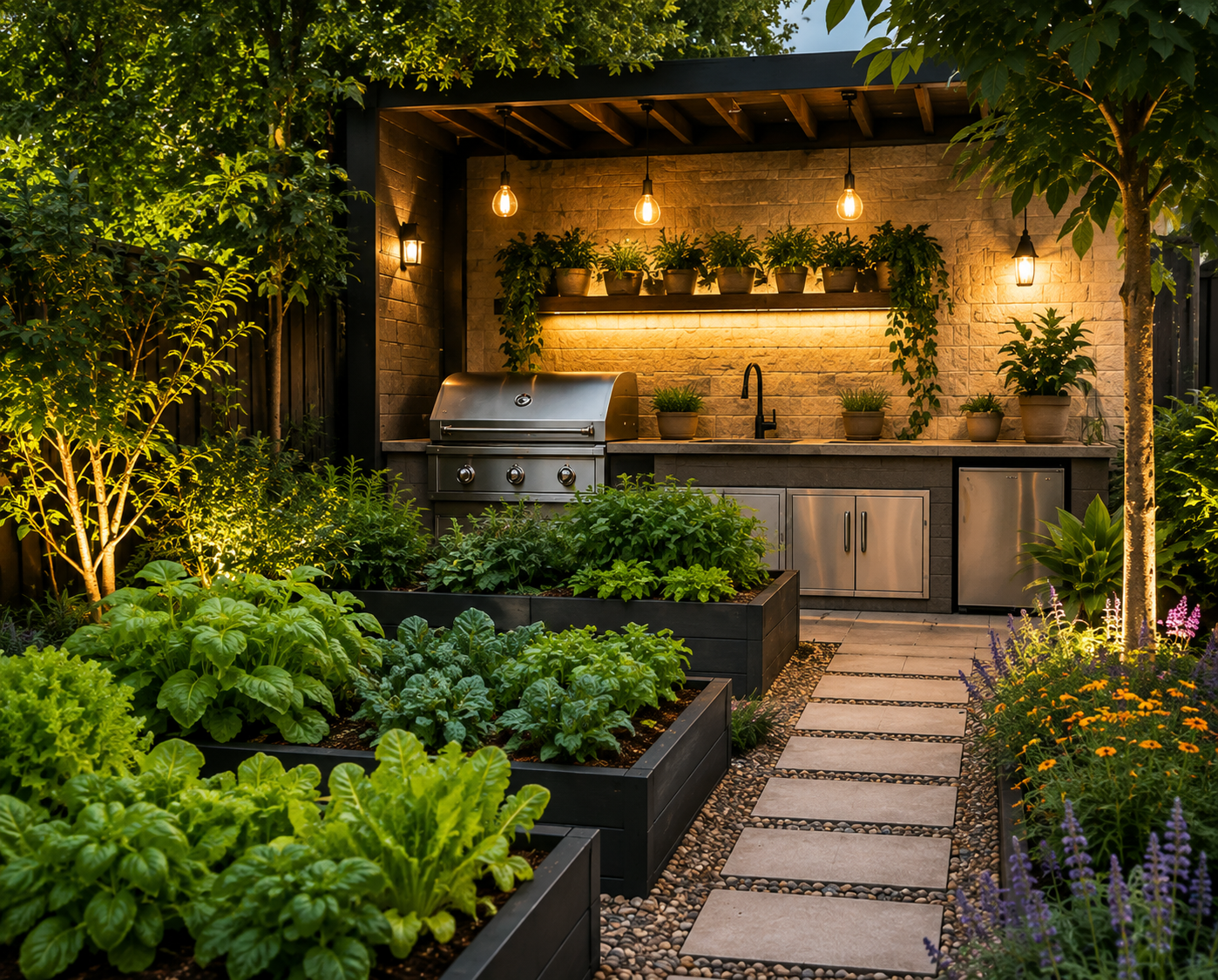
Black Cotton Soil and Kitchen Garden in Ahmedabad
Black cotton soil cracks in summer and waterlogged in monsoon. Here is exactly how we fix it for every kitchen garden we build in Ahmedabad and Vadodara.
Black cotton soil is one of the main reasons ground level kitchen gardens fail in Ahmedabad within their first year. This heavy clay swells and waterlogs in monsoon, then shrinks and cracks in the dry season that follows, and vegetable roots simply cannot handle that swing without support. The fix is straightforward. Raised beds with blended growing media, not planting directly into the native soil and hoping it works out.
Kitchen garden in black cotton soil, key points
- Raised bed height needed: 30 to 45 cm minimum
- Growing media blend cost: ₹4,000 to ₹9,000 for a 100 sq ft bed area
- Native soil should make up no more than 20 to 30 percent of the final blend
- Drainage layer at the base of every bed is essential, not optional
- Ground level beds directly in this soil have a high first year failure rate
Why black cotton soil fails vegetable roots
Vegetable roots need consistent moisture and oxygen to function properly. Black cotton soil holds water so tightly when wet that roots effectively drown from lack of oxygen around them, and then the same soil dries into a hard, cracked mass that roots cannot penetrate at all once the dry season sets in. Most vegetables, tomatoes, chillies and leafy greens among them, have shallow, sensitive root systems that cannot tolerate either extreme for long. This is why gardens planted straight into this soil often look fine for one season and then decline sharply once the soil’s natural cycle catches up with the plants.
The raised bed solution
Lifting the growing area 30 to 45 cm above grade and filling it with a blended medium sidesteps the native soil’s problems almost entirely. We build beds with a drainage layer at the base, coarse aggregate or broken brick work well, then a blended mix on top. This keeps roots in a medium that drains properly in monsoon and holds moisture evenly in summer, regardless of what the ground below is doing through its own seasonal cycle of swelling and cracking.
What goes into the growing media blend
| Component | Approx. share | Purpose |
|---|---|---|
| Native soil (screened) | 20 to 30% | Mineral content, some structure |
| Compost | 25 to 35% | Nutrients, organic matter |
| Cocopeat | 25 to 30% | Moisture retention without waterlogging |
| Coarse sand or drainage layer | 15 to 20% | Drainage, prevents compaction |
Managing seasonal cracking around the beds
Even with raised beds in place, the black cotton soil surrounding them will still crack in the dry season and swell in monsoon. This is completely normal and does not affect the beds themselves as long as they are properly isolated with a root barrier at the base. We recommend mulching the pathways between beds to reduce surface cracking underfoot and to prevent monsoon splash back from carrying clay particles up into the growing media above.
Keeping the bed productive over several years
A raised bed built correctly does not need to be rebuilt every year, but the growing media does deplete gradually as crops draw nutrients from it season after season. Topping up compost at the start of each new growing season, checking the drainage layer has not compacted over time, and rotating what you plant where within the bed all help keep yields consistent from year to year rather than declining slowly the way an unmaintained bed tends to. Most of our clients on an annual maintenance plan see their beds stay productive for five years or more with only routine seasonal care.
Black cotton soil kitchen gardens across Gujarat
This is most relevant in Ahmedabad, Gandhinagar and Vadodara, where black cotton soil is common. In Anand, Rajkot and Surat, soil composition varies more by individual plot, so we always check on site before recommending a blend ratio rather than assuming one formula applies everywhere.
Get a kitchen garden built for your soil
Free site visit. We test your soil and build raised beds with the right blend for it, across all six cities.
Testing Your Soil Before Committing to a Plan
Not all black cotton soil behaves identically, clay content and drainage characteristics can vary even between neighboring plots in the same Ahmedabad neighborhood. A simple test, digging a hole and observing how quickly water drains after filling it, gives useful baseline information before committing to a specific amendment plan. For larger installations, a proper soil test measuring pH and nutrient content is worth the modest cost, since it lets us tailor the amendment mix precisely rather than applying a generic formula that may not fully suit your specific plot.
Common questions

Founder & CEO of GreenLand Landscape, leading landscape design and organic kitchen garden projects across Gujarat.
Leave a Reply